Office Burst Pipe Repair
Commercial Plumbing
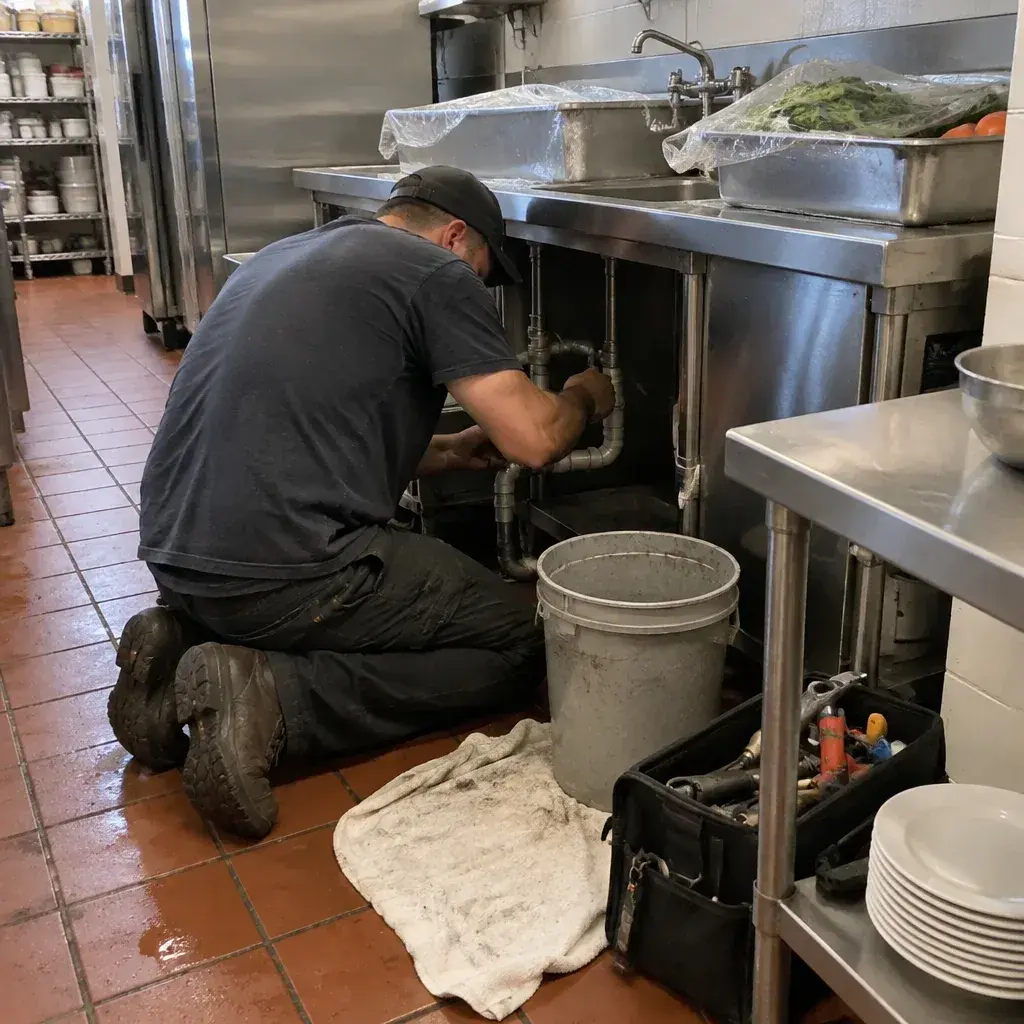
Plan restaurant pipe repair around kitchen needs, controlled access, and clear records of water service interruption.
A plumber identifies the failed supply, isolates it when safe, and repairs or replaces the damaged section with compatible parts. Coordinating access and water service around kitchen needs can help limit disruption; the plumber then checks for leaks and confirms flow.
Emergency burst pipe repair cost depends on where the break sits, what pipe and fittings are needed, and how the repair affects kitchen service. A split in an exposed line may call for a different approach than water appearing far from a concealed pipe. For a restaurant, the work also has to account for which stations can keep operating during isolation and repair. The sections that follow focus on access, protecting active service areas, choosing a compatible repair, and bringing water back in a controlled way.
A sudden hiss, spray, or spreading puddle can mean a pressurized supply line has split. Tell the plumbing pro what staff first noticed, where water is now visible, and which sinks or equipment have lost service. If the shutoff is safe to reach and operate, closing it can limit further flow; keep clear of standing water near electrical equipment. Those first observations help the pro plan an assessment around the affected kitchen or dining area without guessing where the break lies.
When you call, give the restaurant’s entrance and the route to the affected space, then name any locked doors, delivery windows, or active service areas along the way. Identify a staff contact who can meet the pro and point out the relevant fixtures, shutoffs, and building access limits. This practical briefing helps the visit start with the right area in view and lets you flag operational constraints before tools enter the building. Share what is known; the pipe location still needs confirmation on site.
Agree on a work route before the plumber brings equipment into the restaurant. A back-of-house corridor or service entrance may keep tools and removed materials away from diners and food handling, if that route is available and safe. Point out floor transitions, storage doors, and any space staff must keep open for deliveries. A clear path reduces interference with ordinary movement through the building and gives the plumber a direct way to reach the pipe without crossing clean preparation areas unnecessarily.
Ask which fixtures and equipment will lose water when the affected supply is isolated. A shutoff serving several kitchen stations may also stop handwashing or dishwashing, so the manager can decide what service can continue and what needs to pause while the line is unavailable. The plumber can identify the relevant isolation point and explain its reach before operating it. If water is near electrical equipment or the valve cannot be reached safely, staff should stay clear and leave isolation to a safe response.
| Pipe location | Visible signs | Repair choice |
|---|---|---|
| Work zone | Production kitchen, dining room, or service area | Mark the space affected by the leak |
| Water users | Hand sink, prep sink, or dish machine | List tasks interrupted by isolation |
| Entry timing | Delivery period or active meal service | Name the staff contact for access |
| Food handling | Stored food and clean utensils nearby | Note items moved clear of work |
| Nearby equipment | Ice maker, dishwasher, or cooking line | Identify equipment affected by the leak |
| Pipe specification | Material, diameter, and connection style | Record parts fitted to the supply |
| Repair notes | Location and method used | Link progress photos to work notes |
| Service return | Fixtures checked and returned to use | Note leak check and confirmed flow |
Mark a boundary that keeps customers and staff away from the repair work, and move food, clean utensils, and service items beyond it. In a compact dining room, a wet route from the kitchen can cross guest seating even when the pipe is elsewhere, so direct staff around the affected floor. Keep the boundary in place while tools and materials are being handled. This makes the work area easier to control and avoids carrying kitchen items through a space where water or debris may be present.
A stain spreading across a ceiling or dampness beside a wall can be the first sign of a break hidden above or behind that surface. Water may travel along a pipe or building materials before appearing, so the visible mark does not by itself identify the damaged section. Show the plumber where the moisture appeared and whether it changed as fixtures were used. Finding the actual break determines what access is needed and helps avoid treating a distant wet spot as the source.
Before repair begins, clear nearby counters and work surfaces of ingredients, clean pans, and small equipment. Have staff choose a dry route for anything that must be moved, and keep the items separate from supplies used in active food preparation. If a refrigerator, dishwasher, or other unit is close to the work zone, tell the plumber before shifting it; connected services and access can affect how it is handled. A cleared area gives the pro room to reach the pipe while limiting contact with restaurant operations.
Once the break is exposed, the plumber checks the pipe material, diameter, connection, and condition around the split. Those details guide whether a damaged length can be replaced and which fittings suit the existing line. Copper, PEX, and CPVC require compatible parts and methods; a connection that does not match can create another leak. For a concealed line, reaching this point may require opening access to the affected space. The repair choice follows what the pipe and surrounding area show.
A clamp can sometimes slow water escaping from an accessible pipe, but it is a temporary measure rather than proof that the line is ready for normal use. The plumber still needs to assess the split, surrounding pipe, and connection, then determine a lasting repair that fits the installed system. Ask what the temporary measure changes and what work remains before service can resume. That distinction matters when kitchen staff are planning which fixtures can be relied on for food preparation and cleanup.
Before the repair is closed up, tell the plumber which fixtures the kitchen needs first, such as the hand sink or equipment connection tied to a preparation station. The available supply layout determines whether those points can return independently or must wait for the affected line. This conversation lets the pro explain the sequence while the water remains isolated as needed for the work. You can then adjust tasks and service plans around the actual fixtures affected, rather than assuming every station will return together.
After the compatible repair is installed, the plumber can bring water back to the line and inspect the connection while it is pressurized. Keep the work area accessible during that check, and tell the pro if any fixture still lacks flow or shows an unexpected change. Confirm which affected sinks or equipment were checked before staff put the area back into use. A leak check and confirmed flow provide a clear handoff from pipe work to the restaurant’s operating team.
Repairing the water supply line addresses the plumbing failure, while water left on floors or absorbed into building materials can need separate attention. The plumber can describe the pipe work and confirm the repaired line, but extraction, drying, and rebuilding finishes may involve other providers. In a restaurant, note any nearby surfaces or equipment that became wet so the right follow-up can be arranged. Keeping these tasks distinct helps you track what is complete before the affected kitchen or dining area returns to service.
Keep a site record with the first observation, affected fixtures, access route, and the time water service was isolated and restored. Add the plumber’s description of the damaged pipe and repair, along with which connections or fixtures were checked when flow returned. Photos can help staff identify where moisture appeared and what area was opened, especially when the visible water was away from the break. This record gives facilities staff a usable account of the interruption and the work completed for later operational follow-up.
Some places have their own Burst Pipe Repair pages, while other inquiries follow the same referral; ask the pros we connect you with about local availability, includingFairbanks AK, Anchorage AK and JBER AK. Before choosing a time, ask how arrival is priced and whether a longer drive changes the charge for the first visit.
For an office building, the pros we connect you with generally price burst-pipe work by visit; $350–$1,300 offers a planning reference. A small branch line differs from a larger supply run, and repeat callouts, pipe material, access, and replacement needs shape the estimate.Commercial estimates can change when a larger supply line needs fittings suited to its system or when access affects the repair. When calling, share the pipe material, size, and connection type if known, where the line can be reached, and which area lost water. Ask whether locating the break is included.Use pricing guide to compare factors that shape a commercial repair estimate; commercial overview describes the assessment before work starts.
Commercial Plumbing
Hotel Plumbing Coordination
Multifamily Pipe Repair
Whether service can continue depends on how the restaurant’s supply lines serve its work areas. The plumber can identify which stations lose water if a line is isolated, then discuss whether unaffected areas can keep operating. You can use that information to set boundaries for food preparation and customer service while repairs proceed. If the failed line serves essential operations, those activities may need to pause until water is restored.
Choose a staff contact who can approve entry, unlock service spaces, and describe which areas must stay clear. Show the plumber the suspected leak and point out any doors or work zones that need coordination with deliveries, food preparation, or guests. Move portable items from the path and tell staff where the plumber will enter. Keep customers away from the work area while the line is assessed and repaired.
For the maintenance record, note the affected supply and fixtures, when service was interrupted and restored, and whether the plumber repaired or replaced pipe. Photos of the exposed area can show the original condition and completed work. Record any areas left open for access and who coordinated the work. These details help the facilities team understand what changed and which operations were affected.
Whether service can continue depends on which supply the plumber must isolate and whether the affected area can be kept separate from active food service. A branch shutoff may leave other fixtures available; a shared line may interrupt sinks or dishwashing. Keep food, utensils, and guests clear of the work zone. Have the plumber check the repair and confirm flow before staff put affected fixtures back into use.
Discuss the affected restaurant area, operating limits, and access route with an independent local plumbing pro.
Call (800) 215-5682