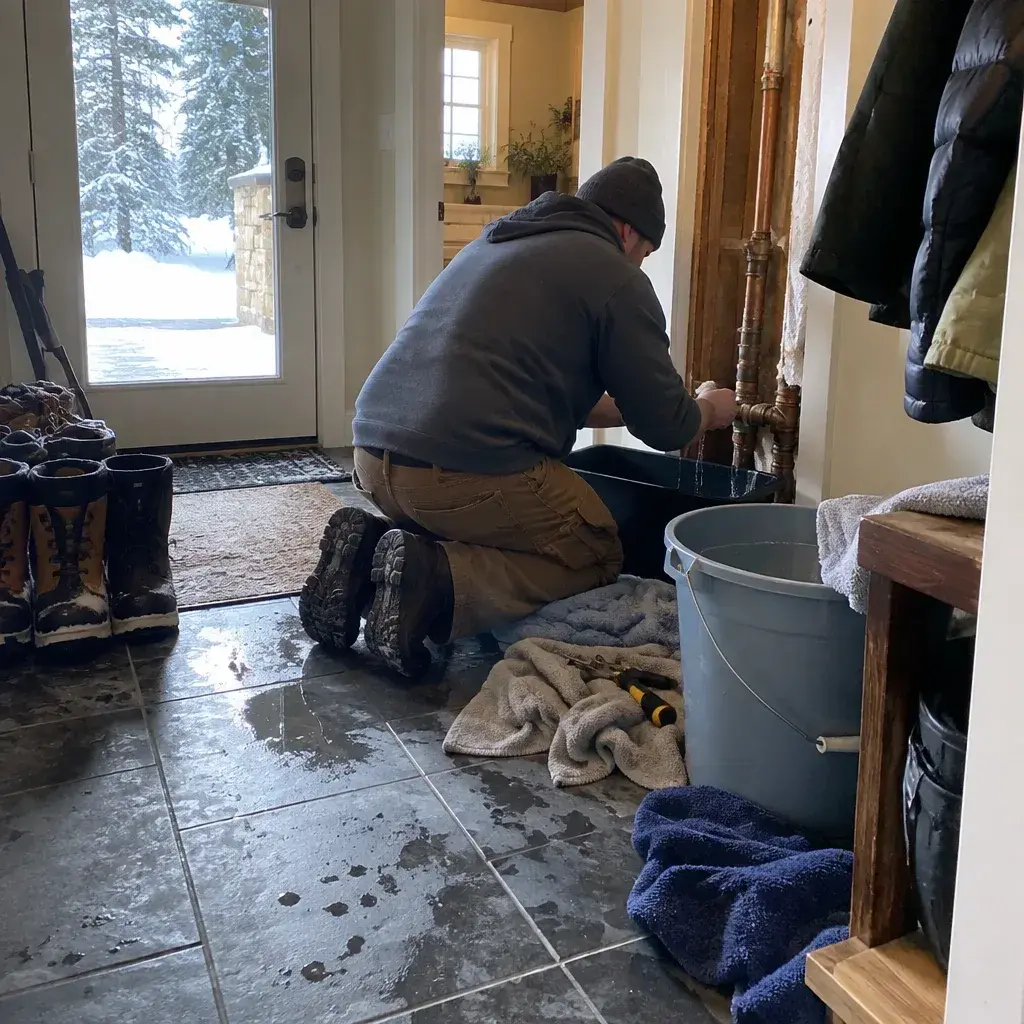
Cost Factors
Pipe location, access, material, damage, and replacement choices can all shape a burst pipe repair estimate. Learn what to ask about the quoted scope and related water damage work.
Read article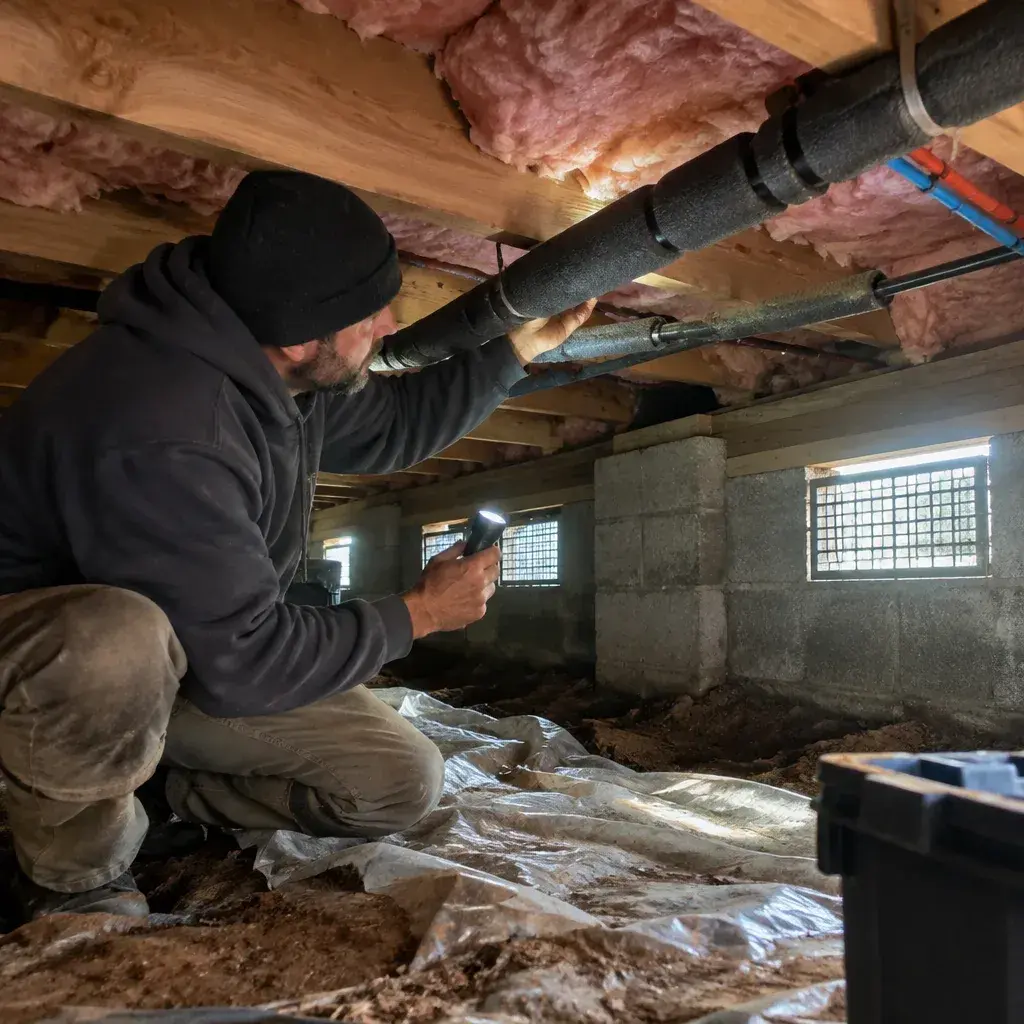
Exposed pipe repair, from safe isolation through leak checks.
A visible burst can turn a utility room, basement, or shop back area into a wet work zone before you know how much line is affected. In places with older buildings, such as Old City and Society Hill in Philadelphia, exposed supply pipes may sit among stored goods, finished walls, and other equipment. The first useful detail is what you can see safely: the leak point, the pipe material, and whether water is still flowing. Once the line is isolated, the plumber checks the damaged area and identifies the pipe and connection type. Those details guide the compatible parts and repair method; room to work and the condition of nearby fittings also affect labor and timing. After the joint is made, water returns gradually while the plumber checks for seepage and confirms flow at a fixture.
The pros we connect you with first confirm the water is isolated and inspect the break, the adjacent pipe, and its fittings. Looking at each nearby fitting helps distinguish a failed connection from a break in the pipe itself. They remove the failed area or connection, make a compatible joint, then restore flow and check for leaks. Tell the plumber where the water appears and what the pipe is made of, if you know.
A damp ceiling can sit away from the break, so Visible Water Pipe Repair follows the water path before access is chosen; the pros we connect you with assess the line.
When a supply line serves your household, residential burst pipe repair is the relevant path; commercial burst pipe repair is for people responsible for property used by tenants or a business.
A lengthwise split, a sharp opening, or a stream shooting from the pipe points to a pressurized supply leak. The water may keep coming until the affected supply is shut off, so note where it escapes without moving close to electrical hazards or standing water. If the pipe is reachable and the valve is safe to use, isolate the supply. When you contact a plumber, describe whether the leak is a spray, stream, or steady run and where it begins.
The pipe itself may look intact while a joint, elbow, or connector leaks. Watch from a safe, dry position for water gathering at one seam, then running down the pipe and dripping elsewhere; the wettest spot on the floor may not be the source. Tell the plumber which connection appears wet and whether nearby pipe is also damp. That distinction helps focus the inspection on the exposed assembly without assuming that the fitting alone is the only damaged part.
The plumber confirms which supply feeds the exposed line, checks that it is isolated, and makes sure the work area can be approached safely.
They examine the break, adjoining pipe, and connection to identify the pipe type and where sound material begins.
The cut ends are prepared to accept a connection that fits the material and size of the existing line.
Water is restored gradually; the plumber watches the new joint for seepage and checks flow at a served fixture.
Shutting off the supply limits continued flow while the licensed pros we connect you with examine the exposed line. A fitting may be the source, or damage may extend into adjoining pipe. A sound repair depends on identifying that boundary and matching the existing system, then checking the joint with water flowing. Plumbing repair addresses the supply line; cleanup and repairs to wet surfaces may involve separate providers.
Repair parts and joining methods must suit the installed pipe, which may be copper, PEX, CPVC, or another approved material. The plumber checks the pipe size, connection, and condition before choosing compatible fittings and making the joint according to that system’s requirements. Requirements for plumbing work vary by location and by the scope of the repair, so the details should be checked where the home is located rather than assumed from a national guide.
Rules for repairing a visible water line can differ by city and county, especially when work affects a building’s supply, shutoff valves, or shared piping. The pros we connect you with can explain how their license applies to the requested work and whether local permits or inspections may be needed. Before scheduling, describe where the pipe is exposed, what materials are visible, and whether water service has been shut off. Requirements depend on the property and local authority.
Budget figures for Visible Water Pipe Repair in the United States are provisional. Before booking, have the provider identify any arrival charge and record the repair scope on the estimate.
| Water isolation | Leak check | Flow restoration |
|---|---|---|
| Small release | Failed connector renewed while the usable supply pipe stays in place | an estimated $150–$400 |
| One-site repair | Break pinpointed, affected pipe repaired, and restored flow checked | an estimated $175–$520 |
| Long-run replacement | A damaged line can reduce water flow through fixtures connected to that branch. | an estimated $150–$400 |
| Behind-surface work | Damaged pipe joint corrected while serviceable line remains undisturbed | an estimated $360–$1,600 |
Choosing a more durable component can raise the plumbing total, while water removal and restoring affected rooms may be billed separately. Before accepting added services, use the full pricing guide to see how those decisions shape the estimate and what the quoted repair includes.
A plumber identifies the split or failed connection, then isolates the affected supply and examines the pipe around the damage. Keeping the affected section isolated prevents more water from passing through the damaged pipe during the repair. After making the repair, the plumber brings water back gradually, checks the new joint for seepage, and confirms flow at a served fixture.
The plumber inspects the exposed break and the nearby joint and pipe to see where sound material begins. Pipe type, size, and connection method guide the compatible repair parts. The failed portion or connection is then addressed with a method suited to that line, followed by a leak check before service is considered restored.
Time varies with the size of the damaged area, the pipe and joint type, working space, and whether suitable parts are available. A repair confined to an accessible spot may take less work than one involving more of the line. The plumber can give a clearer estimate after examining the pipe and confirming the needed materials.
A change in flow at the fixture can help show whether the supply is working after the repair. They can also run a served fixture and observe the pipe for fresh seepage. If water appears again, point out its location so the repair can be reassessed before the area is closed or covered.
Keep water off at the affected supply until the repair is complete to limit flow through the damaged section. That visit addresses the supply line itself. If flooring, drywall, or belongings need attention, ask the appropriate restoration provider to assess them separately; the plumbing check does not determine how those materials should be dried or rebuilt.
Use $150–$400 for this work as the estimate for visible water pipe repair. The assessment identifies which part of the pipe is damaged before the repair plan is set.
Know which safety details matter while water is still escaping.
Pipe location, access, material, damage, and replacement choices can all shape a burst pipe repair estimate. Learn what to ask about the quoted scope and related water damage work.
Read article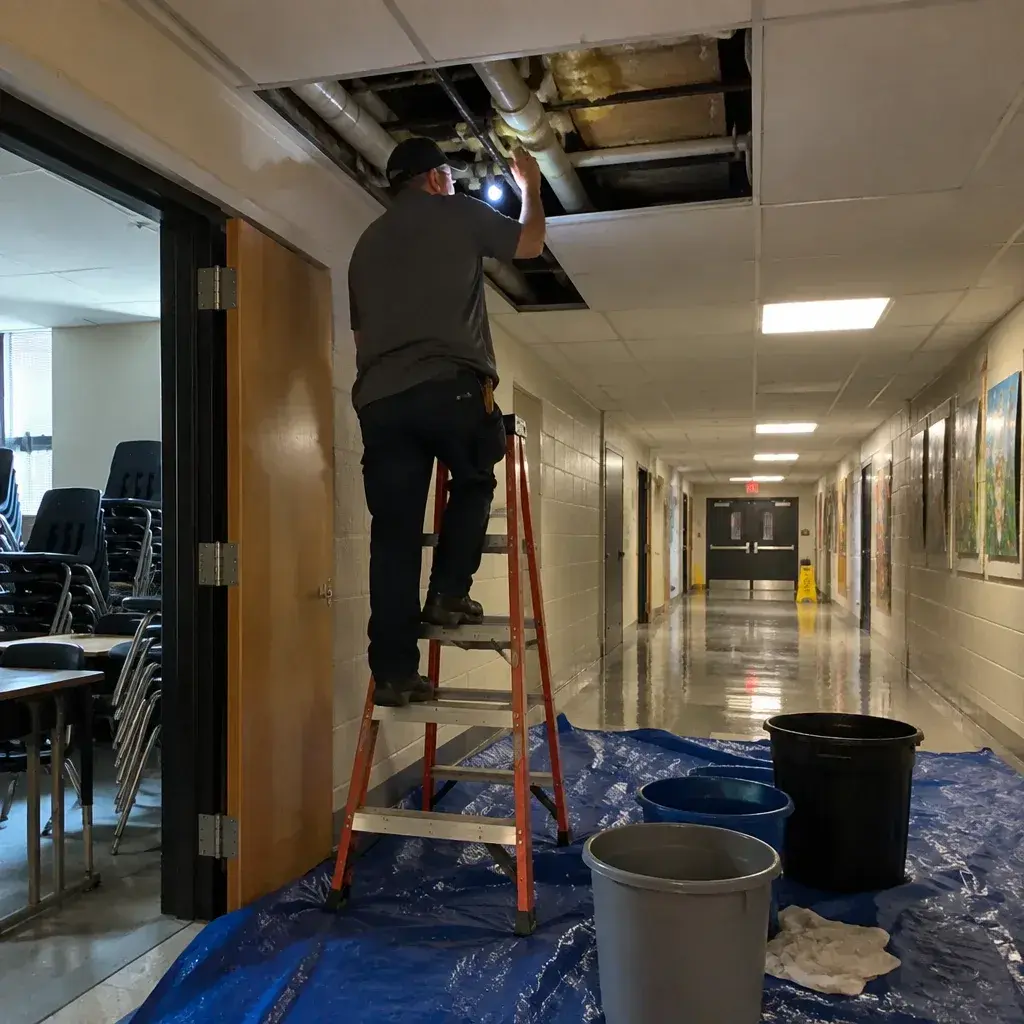
An after-hours call can add labor or dispatch charges to burst pipe repair. Learn what to ask, how to document the leak, and what to clarify before work begins.
Read article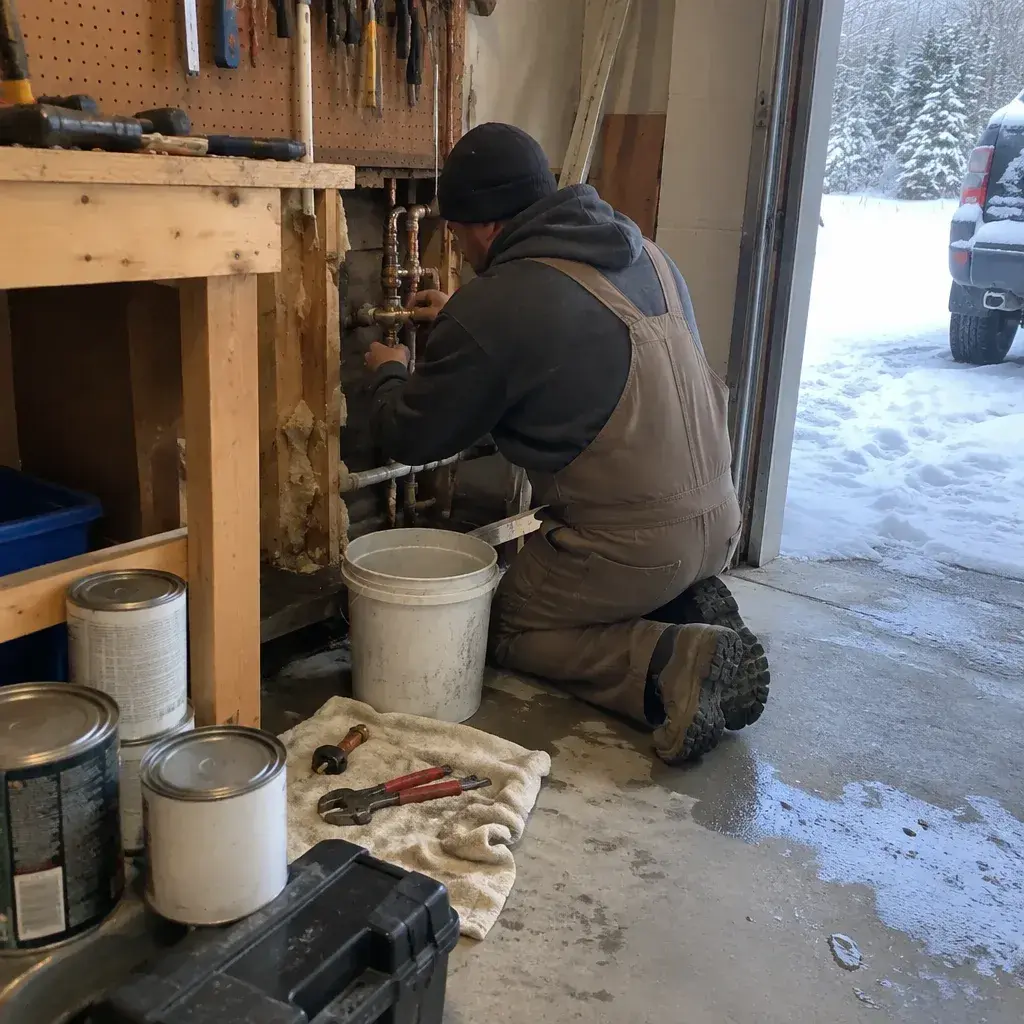
See what can make a burst pipe bill grow, how labor and materials fit into it, and what to check in an itemized estimate before approving the repair.
Read articleSome U.S. locations have a dedicated page with local information; inquiries from other places follow the same referral route through the pros we connect you with. Share the service address and describe the affected area so they can tell you whether a visit can be arranged there. Ask about scheduling, any inspection charge, and which plumbing work the written estimate includes. If a repair is proposed, ask what warranty applies, if any, and whether water removal or drying is outside that work.
Call (800) 215-5682