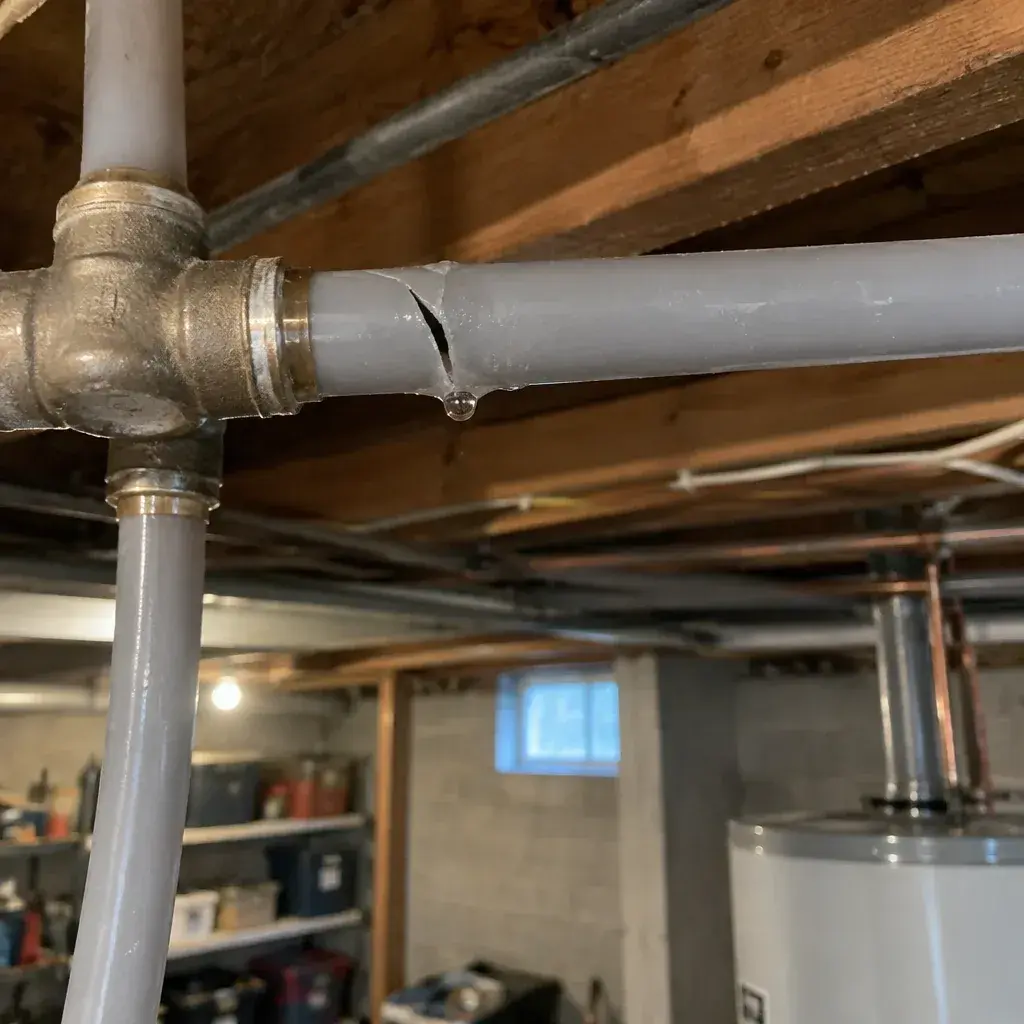
Stress on Water Lines Inside Buildings
Polybutylene appears in some homes because plumbing materials vary with a building's construction and later repairs. A home's location alone does not establish what is behind its walls; the exposed pipe and its markings are better clues. A plumber can assess its present condition at the break.
Past plumbing work can leave different materials along one supply route, especially where sections were altered or repaired. That matters when a burst occurs: the replacement fitting must suit the pipe actually present at each connection. Inspection helps distinguish an isolated failure from a longer damaged run.
Place pages give local context for the areas named on the site. Local information can help visitors understand a service area before they use the shared referral.
Choosing a Compatible Pipe Section
- PIPE TYPE
- Pipe markings, size, and connection details help the plumber identify which replacement parts suit the installed polybutylene line.
- BREAK
- A localized repair can work when the failed length is limited and sound pipe remains at reachable connection points.
- FITTINGS
- Cracking beyond the opening or access that prevents secure joints can mean removing a longer length of pipe.
- ACCESS
- A visible transition between the old pipe and its replacement can show where the repair begins.
- LEAK CHECK
- The plumber removes the damaged tubing and fits a compatible replacement section.
- COST FACTORS
- Temperature changes can affect exposed supply plumbing, particularly where a run is poorly protected from cold or heat. Seasonal conditions alone cannot show why a polybutylene pipe failed; its markings, joints, and surrounding material need inspection to judge its condition.
- SITE ACCESS
- an estimated $275–$1,100
Why Water May Surface Far From the Break
PEX pipe. Both are flexible plastic supply lines and can look similar in a short exposed section. A longer exposed stretch may reveal markings that are not visible near a break. Read the printing on an exposed straight section of pipe, where material and size may be marked. A connector's color or shape is not enough to identify the line. If the lettering is worn or hidden, a plumber can inspect the pipe at the break and confirm its type.
Checking Pressure Before Restoring Flow
The plumber traces the leak and exposes the affected area as needed, then confirms whether the line is polybutylene and notes its size and connection style. They inspect the failed point, nearby joints, and surrounding pipe for cracks or deterioration. That assessment shows whether sound connection locations are available for a localized repair.
For a contained break, the plumber cuts out the failed length and joins suitable replacement pipe using fittings compatible with the existing line. If cracking extends beyond it or access prevents reliable joints, a longer portion may need removal. The completed work is pressurized and examined for leaks before closure.
The leak check helps determine whether the repair itself is holding before further work is considered. $350–$1,300 One visit can settle an isolated, reachable split if the repair holds under a leak check. Plan further work only if inspection finds additional damaged pipe that needs attention.
WHEN A BREAK NEEDS FIXING OR SYSTEMS NEED WATCHING
| Leak Check |
Repair Method |
|---|
| Recent pipe damage, identified near its start | Urgent leak response |
| Water escapes from an earlier pipe fix | Repair completion |
| Several failed sections on one supply route | Section renewed; pressure hold confirmed |
LINE SERVICEPlumbing rules and permit requirements depend on where the work takes place; the available facts do not establish a national license or code rule for this repair. Before work begins, ask which qualifications and approvals apply to the repair. Ask what work was completed and request the parts and leak-check details on the invoice.
How Wet Materials Affect Pipe Access
Water can leave a burst supply line and spread through flooring, cabinets, insulation, or a ceiling before the leak is obvious. The longer flow continues, the more building materials may become wet and need attention. Wet materials may need inspection even after the plumbing leak has stopped.
Note Where Water Travels Indoors
A damaged supply line can keep leaking while the system remains pressurized. If a shutoff is dry and safely reachable, you may close it; otherwise leave it alone. You can photograph visible pipe markings from a safe place and clear stored items nearby. Leave cutting, clamping, and pressurized-line work to a plumbing professional.
Electrical Exposure Around Leaks
A burst polybutylene line is a household hazard when water reaches electrical equipment or keeps entering a finished space. Water can remain behind walls or beneath flooring even after the visible flow stops. Pipe condition can change along a run, so one break cannot show whether nearby tubing or joints remain sound.
Is Leak Checking Part of the Repair Cost?
A hard-to-reach break can add work before the line is repaired; ask the pros we connect you with to describe that access work in their estimate.The guide amount reflects work on the damaged supply line and can shift with its position, access, and the section needing replacement. A concealed break may require opening a finished surface before the plumber can see the full repair. Water extraction, drying, and rebuilding fall outside $350–$1,300 and call for separate services.The full spread of charges, with common cost drivers, appears in pricing guide.